WorkApplied AI
Stuword
AI compliance assistant: every citation verified, word for word, against approved sources.
- 0
- unverified citations shown: a citation that fails the deterministic check is stripped and logged
- Clause-level
- citations anchored to a section, clause or control ID in a human-approved document version
- NIST SP 800-171
- and CMMC: the first compliance domain, with a company's own policies alongside the standard
- Every answer
- leaves an audit record: who asked, what was answered, and from which document version
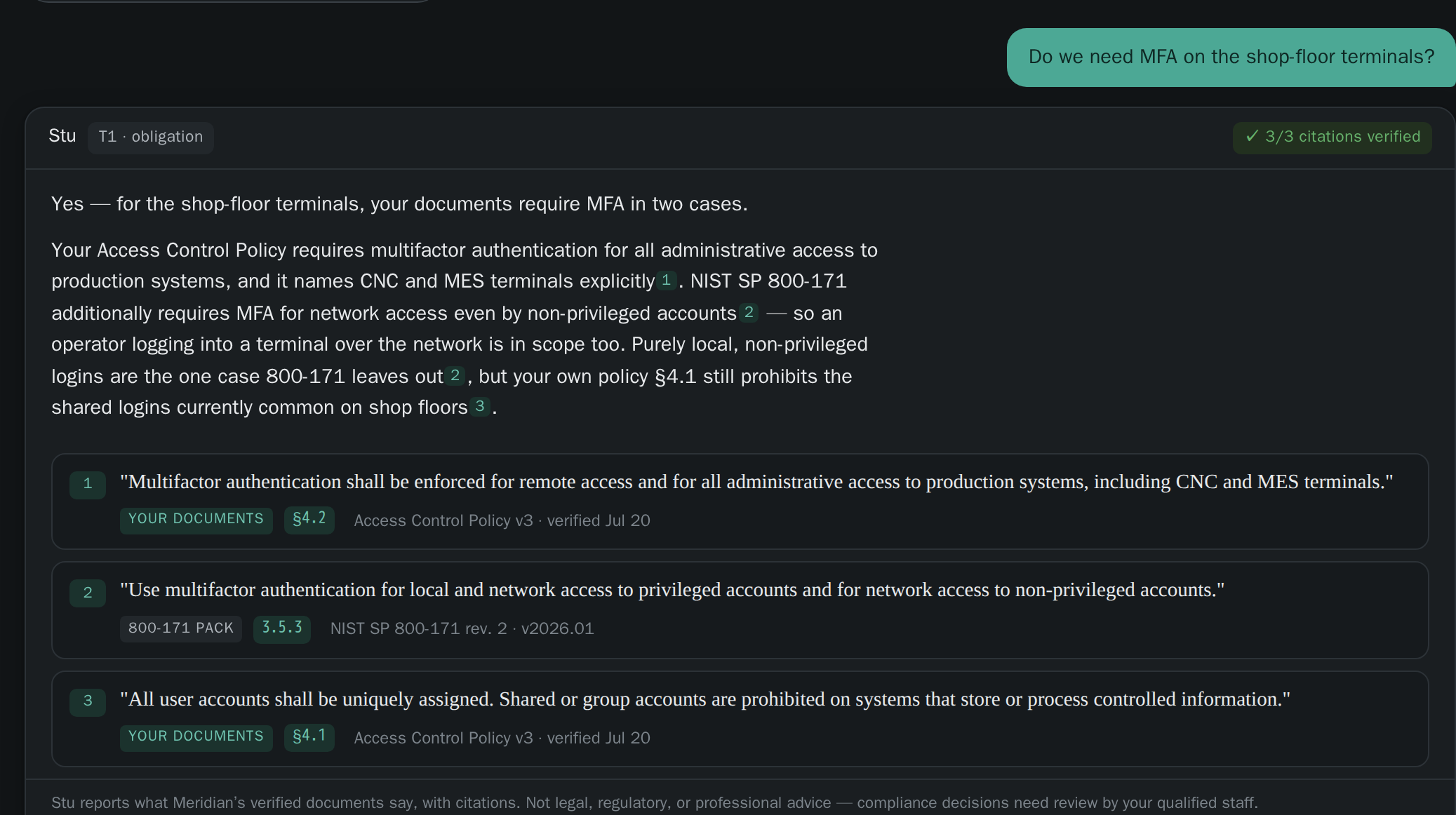
Stuword is a compliance assistant built on one rule: an answer is only as good as its citations. A company uploads the documents it has to follow, its own policies alongside standards such as NIST SP 800-171, and its people verify the text page by page. Employees then ask questions in plain language and get answers that quote the approved source.
The language model is the easy part. The hard part is trust. Every citation is checked deterministically, by code rather than by another model, against the exact approved text. A citation that fails is removed and logged. Questions outside the company’s configured scope are refused and routed to a person. Anything that starts to look like advice arrives as a draft for a named reviewer, not as an answer.
Early access is open to design partners, and the product is deliberately still in design. The plan went through eight independent reviews and two adversarial wargame rounds, which overturned the original go-to-market and recorded every rejected idea so it can’t quietly come back. The build is queued behind four irreversible decisions, each waiting for a signed human decision. The mock-up shown here is scripted, with sample data for a fictional manufacturer.
It carries forward a lesson from years of enterprise product work: in regulated work, AI is useful only when you can audit what it said and why.