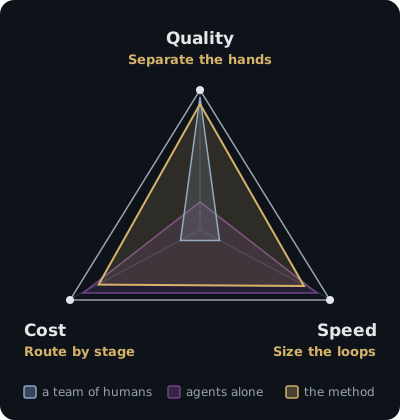
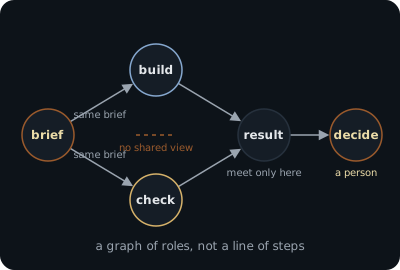
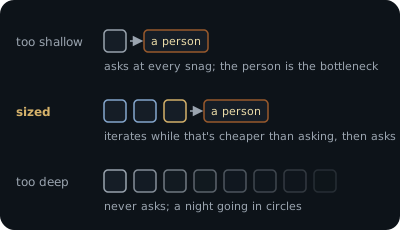
Anyone can point AI agents at a codebase. The difference is when a person decides. Conductor, the process I arrived at, works like an engineering team that knows when to escalate. Routine implementation runs on a fast, lower-cost model; planning, blind test-writing and review run on the most capable one. When an implementation fails its checks twice, the final attempt moves up to the stronger model. When the builder meets a question it shouldn’t settle alone, it stops and asks. And every decision that is hard to reverse, such as a database schema, an authentication design, pricing or a deploy target, waits for a senior human. Expert time goes where it changes the outcome, and delivery stays cost-effective, predictable and high quality.
Nothing advances on a model’s say-so. Gates are exit codes, tests are written blind by a model that never sees the implementation, and a reviewer’s approval is bound to the exact commit it read. Each one-way door is red-teamed by adversarial critics, and the work does not start until the decision is signed; other work keeps moving meanwhile. The questions asked at those doors come from shipping enterprise products at Motorola Solutions, Johnson Controls and Panasonic.
Every run leaves a receipt in a ledger: the models used, tokens, cost, time, and the commit that was reviewed and merged. Across 118 features shipped in three products, that ledger is how I know the process works.
The products were the test. The process is the result.